
• About Me

Some Well-Tempered Years

~ And Other Adventures

Some Well-Tempered Years

Author Archives: beverlykl

I am not that important. I am loved beyond measure.

24 Friday Aug 2012

Posted by beverlykl in Knowing, Learning, Teaching

≈ 4 Comments

A shift has happened.  Schedules are fully in place — kids’ school and activities, full-time work, and evening meetings or events.  Summer was a gift, especially this first one in five years without doctoral demands and with children old enough to do their things while I did mine.  I am thankful for what we had, but the structure we inevitably needed has inevitably come.

Time at the piano and time to write about it will require more commitment and planning than before. When I set out on this project, though, I added the “and other adventures” to the title so if the practicing wasn’t happening I could write about what was happening.  This week one of the happenings was this:

These notes are from yesterday’s teaching faculty workshop.  Some years guest speakers give the workshop and these individuals are often inspiring and provoking.  This time we heard from our own colleagues on three themes under the meta question, “What is Unique about a Goshen College Education?” — Philosophical/Religious Underpinnings, International Education, and Pedagogies Within and Across Disciplines.

It was a great day. I geeked out on my love for Goshen College and my love for pedagogy.  Some highlights:

• From John D. Roth’s new book Teaching that Transforms (chapter 3 was one of our readings for the day) an exploration of the dispositions found in good teaching: curiosity, reason, joy, patience and love.  John, Professor of History, offered an Anabaptist theological framework for pedagogies anchored in our senses, and for the act of learning as a sacred act, as an act of worship.

• Kevin Gary, Professor of Education, spoke of a “great spiritual truth” that holds two ideas in tension — 1. you are not that important; 2. you are loved beyond measure.  Experiential learning happens best when we both suspend self and open self to the experience. I also learned from Kevin that I need to read some T.S. Eliot.

• Beth Martin Birky, Professor of English and Women’s Studies, reflected on how leading Study-Service-Term took her outside of her specialties but also deepened her scholarship as she began a multi-year research project about women in Costa Rica. Her commitment to personal engagement with the women she wanted to learn from and her ability to creatively engage college students in her research are models I want to remember.

• Ross Peterson-Veatch, Associate Academic Dean, suggested a working theory for our teaching, a bridging concept to help students: 1. know what to pay attention to and what not to pay attention to; 2. have a structured experience; 3. have time for structured reflection; and 4. make a commitment to what is known now that wasn’t known before.  This theory reminded me of the educational philosopher Maxine Greene’s trio of steps for meaningful engagement in the arts (from her book Releasing the Imagination): 1. exposure; 2. active engagement; and 3. reflection.  Ross deepened this for me and also arranged it as a quartet with the addition of commitment.  Perhaps this commitment helps us avoid outcomes where we “had the experience but missed the meaning” (from the 3rd quartet of Four Quartets by T.S. Eliot — Thanks, Kevin).

There was more to this geek-fest — a “History of Goshen College in 12 Minutes” by Steve Nolt, the story of Study-Service-Term by Tom Meyers, the role of language-learning on SST by Dean Rhodes, and pedagogical vignettes by about ten other colleagues.  Kathyrn Meyer Reimer, outgoing faculty chair, did a masterful job of organizing the day and I’m grateful.

And now, with my head full and my hands too quiet, I will play some Bach this weekend. I will trust that my own art-making will in some way nurture my teaching disposition into more curiosity, reason, joy, patience, and love to offer my students. I will encounter, experience, reflect, and commit to what is learned. I will remember I’m not that important.  I will be ok with this because I know I am greatly loved.
Ups and Downs

13 Monday Aug 2012

Posted by beverlykl in Music Theory, Practicing

≈ Leave a comment

One of my favorite ways to make sense of music is as simple as simple can be — to follow the up and down movement of the parts.  Bach’s Prelude No. 13 in F# Major from WTC Book One is a fun one for this.  The opening motive is a broken chord that goes up, then down, then skips to the top of the triad into a trill.  The hands then gently follow each other — the left hand steps down or up while the right hand finishes the triplet by outlining the chord of the moment in that same direction.  Quite often there is clear overall movement either up or down but other times the hands settle briefly into opposite (contrary) motion, with the left hand gradually shifting down while the right hand goes up.

As I play this prelude I enjoy rocking my hand in the direction of these melodies.  When they move in parallel motion this means a slight rocking motion upwards or downwards for both.  I especially love the swinging feeling enabled in the fleeting contrary motion moments — you might see this at the end of the video.

I forgot to rotate this video before uploading and although I eventually figured out how to do some editing in YouTube, I became intrigued by its original positioning.  Learning to play the piano and how to read music is often mystifying until the inconsistencies get sorted out. The notated music moves left to right on the page while the note heads move up and down.  But the keys are level, moving right for up and left for down.  As the notes on the page move down both vertically and to the right, the eyes follow to the right while the hand moves down horizontally and to the left.  And then there are those opposable thumbs, wonderful for enabling the contrary swinging feeling mentioned above, but also maddening at times: the left hand thumb is at the “up” end of the hand while the right hand thumb leads the way down.

Now that I’ve highlighted all the up and down confusions in a possibly confusing way, here is the good news: With the sideways viewpoint of this video there is a vertical visual of the ups and downs. As simple as simple can be, but even more so.

Enough with the words!  Enjoy!  It’s Bach.  It’s beautiful. It moves up and down.

Never ever do this again

11 Saturday Aug 2012

Posted by beverlykl in Practicing, Teaching, Time

≈ 1 Comment

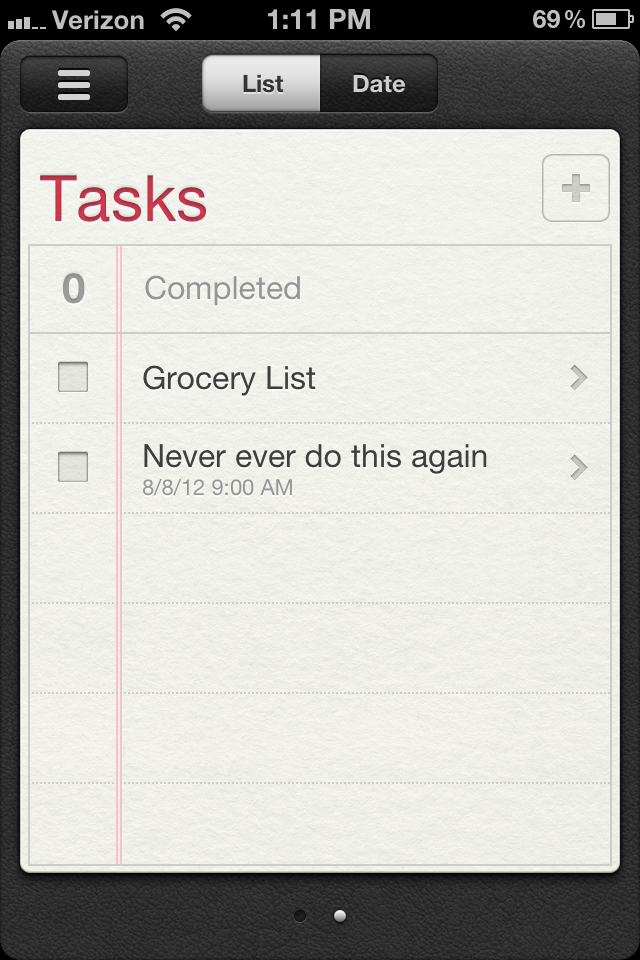
The other day I was driving home from errands with the girls and I turned down a city street I usually avoid.  As I should have remembered would happen, we found ourselves in a long line of traffic at a stubborn red light.  I said to Greta, “Remind me to never ever do this again.”  She decided to tell Siri to send me a note and so the next day at 9 a.m. I saw this on my phone.

Image

As I enter the land of more intentional practice my bad habits are on display, habits I wish I would never ever do again:

1. Read music without thinking about what I’m playing, without listening carefully to my sound, or without observing what is happening technically

2. Play the same passage with the same bad fingering, or a different fingering each time

3. Forget to mark the score when I make a reading mistake more than once (“B#, dummy!”)

4. Whirl through a piece without addressing the problem spots, as if they will magically take care of themselves some day

5. Start faster than I can handle throughout the whole piece, resulting in a messy mix of speeds

6. Fill up my practice time with simply “playing” rather than “working” — forgetting to set one goal at a time and work towards an assessable outcome

These habits are human, so human that of course to expect to never ever do again is a set up for failure. Sometimes I need to play rather than work and some mistakes need to be made a few times before I am convinced there is a better way.  But I know my foibles and how much time they can waste.  I also know what I try to teach.  This new project is a good exercise in aligning intention with action and in matching my advice with my own reality, with plenty of grace to balance the “never ever” hyperbole.

The WTC and Me. And Amy Grant.

06 Monday Aug 2012

Posted by beverlykl in Learning, Motivation, Practicing

≈ 1 Comment

My background with the Well-Tempered Clavier Book One is somewhat scattered, as is my whole piano past.   Were it not for a childhood experience in Kingston, Jamaica, I would likely not be playing piano today.  When I was nine years old my family moved to Jamaica for my parents to be country representatives with Mennonite Central Committee.  By then I had completed two years of mediocre piano study (on my part), but my parents had the sense to find me an excellent teacher in Kingston.  Mrs. Foster-Davis had huge and scary guard dogs outside her estate, an impressive studio with two grand pianos, and a commitment to the Royal Conservatory of Music piano materials and examination sequence.  Although she was nearly blind, she used a magnifying glass effectively to check my hand shape and fingerings.  She assigned music that was too difficult for my limited reading skills, but with a slower pace of life allowing lots of time to play piano I gradually rose to the challenge. I left Jamaica a couple years later having completed the R.C.M. Grade Four adjudications and returned to southeastern PA with the awareness that playing the piano was one of my best gifts.

Back home and working with another fine teacher, I learned some of Bach’s two-part inventions and enjoyed them as much as anything that allowed the fingers to fly around quickly.  I learned only one piece from the WTC book one in high school, a pair often assigned as one of the easiest, the Prelude and Fugue No. 2 in C minor.  The prelude is a classic pattern piece, an excellent rotation study for the fingers building to some fun tempo changes and improvisatory moments that nicely set up the fugue to follow.

I found special motivation for the fugue from the 80’s Christian contemporary song “Sing Your Praise to the Lord” made popular by Amy Grant. Composed by Rich Mullins, the song opens with six measures of the fugue and continues with some fragments as the song unfolds.  I am not much of a music snob (I went to a Merle Haggard concert last night, for goodness sake) and I loved this fusion of classical and Christian pop.  True, I loved it more in 1985 but I still kind of love it.


I found the sheet music and learned my first Bach fugue, or at least part of one, in this format.  I sang the song, pretending I had the ascending backup instrumentals supporting me at the piano, and dreamed of being Amy Grant but only better because I could also play the fugue part.

In a future post I will write more about my past experiences with the Well-Tempered Clavier.  Now I need to go practice, motivated by something other than wanting to be Amy Grant.

How we spend our time

02 Thursday Aug 2012

Posted by beverlykl in Motivation, Time

≈ 1 Comment

I feel like I should explain my “Dead White Guy?  Really?” title and commentary in the first post.  Attempts to be witty can easily be interpreted as disrespectful, and I meant no disrespect towards J.S. Bach.  I hope he knows that.  Taking on a project like this, however, involves some evaluation of how I spend my time broadly and specifically with music.

A few weeks ago at church we had a guest speaker from Goshen’s Interfaith Hospitality Network (IHN) who shared about the organization’s work with our city’s homeless population.  It was a moving and sobering reminder of the significant needs right here in our community.  As I listened I found my mind wandering to my exciting new project —  “I’m going to learn WTC Book One! I can’t believe it!”  Then the speaker’s voice cut through my delight and I snapped back to the stories of families struggling to break out of poverty and those dedicating their time to help them. My new project seemed slightly more ridiculous — perhaps my first post should have been titled, “Hours of your life learning solo keyboard music when there are so many needs in the world?  Really?”

The usual responses to this forever question are comfortably lodged in my consciousness — a hurting world needs art and beauty, etc.  But the next layer of guilt soon arrives, reminding me of today’s creators and composers who represent so much of the world’s diversity, work hard on their craft and are in need of exposure.  Why not focus my time sharing the art and beauty of this breathing music rather than on a volume that is so deeply entrenched in the Western classical musical canon?

Last night I watched a Jon Stewart clip about the Chick-fil-a mess and a solution for these life conundrums was revealed — like carbon offsets, let’s offset our money and time choices. For every Chick-fil-a sandwich we feel guilty about (if we do), a Ben and Jerry’s pint.  For every prelude, I could volunteer a couple hours at or donate to IHN.  For every fugue, I could do something tangible to promote music by a living composer.  (Start at 2:15 to see the relevant part of this clip):


Will I do these things?  I don’t know yet. To be honest, my encounters with poverty and my concerns about ethics don’t result in as much concrete action as they should. At a core level, in fact, I feel fine about hours spent practicing Bach and don’t know that they need to be routinely offset with anything. However, consistent practices to live out my concerns, even if motivated by guilt, keep me grounded, aware, and honest. And may even do some good.

A dead white guy? Really?

29 Sunday Jul 2012

Posted by beverlykl in Knowing, Learning, Motivation, Practicing

≈ 3 Comments

I am going to learn the Well-Tempered Clavier Book One by J.S. Bach this year.  I thought at this point in my life I’d be exploring music by living classical composers, finally learning the language of jazz, or even on my way to achieving my dream of being the next Joan Baez. Instead — a dead white guy?  One of the deadest, possibly most over-exposed white guys of them all?  Really?

But.  It is this music that I’m most drawn to these days. My fingers experience a unique joy as I play it, my brain is extra stimulated as I read, analyze, and listen to it, and it makes me sigh deeply and often for its emotional content. I feel a strong need to learn the entire collection (book one, that is).  Now.  This year.

For weeks I’ve been sightreading through WTC book one and reading commentary and analysis on the preludes and fugues. Starting August 1, I’ll begin some sort of disciplined process to learn on a new pair every two weeks with the hope that I’ll know all 24 within a year.

What is a disciplined process? What does knowing mean in this context?  Why do my fingers like this music, what does it do for the intellect, why does it make me sigh?  What thoughts about learning, teaching, leadership, relationships, politics and more might emerge while my brain and hands work through it?  These questions will be part of the experience, which I will process on this blog.

If others read this and experience the process in some way with me, I’ll be grateful to a very dead white guy for enabling that connection.

Newer posts →

Recent Posts

  • You can get there from here
  • Some Sabbatical Reflections
  • Singing for Ceasefire
  • You all know this precocious little boy
  • Helen Longenecker’s Dilemma

Archives

  • December 2024
  • April 2024
  • January 2024
  • November 2023
  • May 2023
  • November 2022
  • March 2022
  • August 2018
  • November 2015
  • August 2015
  • January 2015
  • August 2014
  • May 2014
  • January 2014
  • December 2013
  • November 2013
  • August 2013
  • July 2013
  • May 2013
  • April 2013
  • March 2013
  • December 2012
  • October 2012
  • September 2012
  • August 2012
  • July 2012

Categories

  • Family
  • Higher Education
  • Knowing
  • Learning
  • Motivation
  • Music Theory
  • Peace
  • Performing
  • Practicing
  • Protest
  • Teaching
  • Time
  • Uncategorized
  • Writing

Meta

  • Create account
  • Log in
  • Entries feed
  • Comments feed
  • WordPress.com

Blog at WordPress.com.

  • Subscribe Subscribed
    • Some Well-Tempered Years
    • Already have a WordPress.com account? Log in now.
    • Some Well-Tempered Years
    • Subscribe Subscribed
    • Sign up
    • Log in
    • Report this content
    • View site in Reader
    • Manage subscriptions
    • Collapse this bar
 

Loading Comments...