• About Me

Some Well-Tempered Years

~ And Other Adventures

Some Well-Tempered Years

Category Archives: Practicing

What is calling out for this?

22 Sunday Nov 2015

Posted by beverlykl in Knowing, Performing, Practicing, Teaching

≈ Leave a comment

FullSizeRender

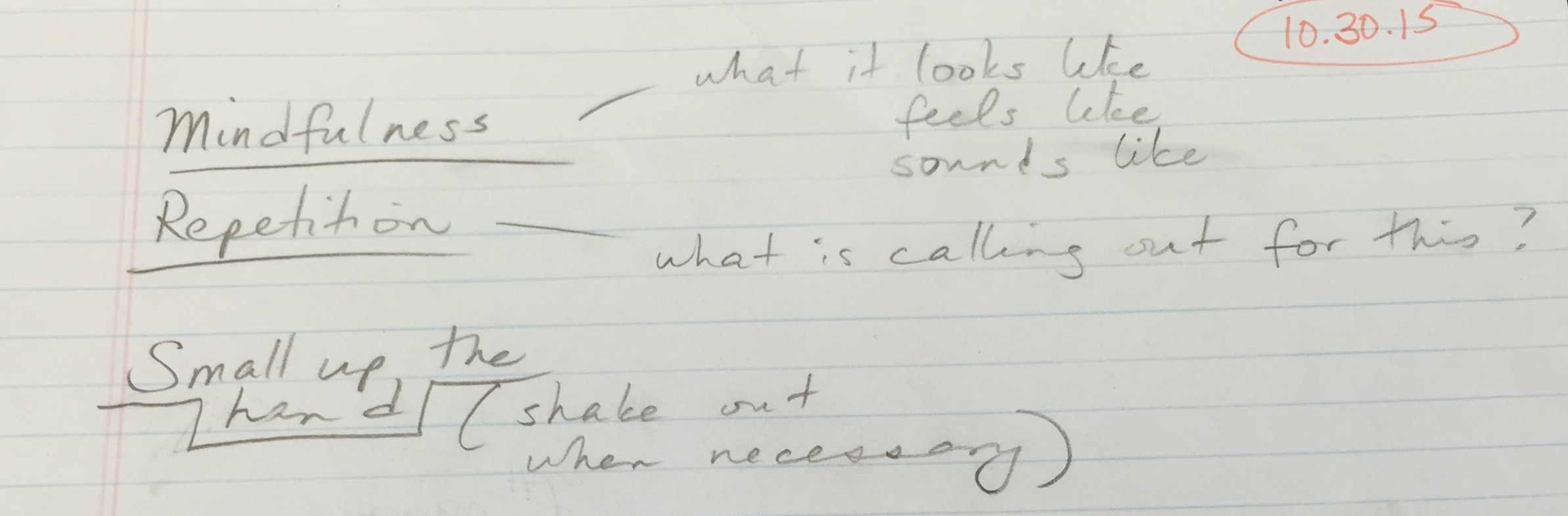
At a recent lesson I noticed the above statements at the top of my student’s assignment. I remembered writing these words, but a week later stared at them as my student warmed up, startled by how directly they spoke to my own practice. My approach to practice is changing because it needs to as I get older, and as my playing changes so does my teaching.

My practice needs to change because I seem to be more nervous about performing these days. My fingers are likely to feel anxious and unsure with material that I haven’t prepared exceedingly well, whereas in the past they would have more confidently sailed through. My current theory is that a loss of innocence that comes with maturity is the increased awareness of what we don’t know.

These three ideas help me focus my attempts to override nerves. First idea: It’s surprisingly easy to do things we are accomplished at without thinking, and we need to counter this tendency to be comfortable in performance. If I’m not mindful of what the positions look like on the keyboard under my hands, what they feel like as my hands and fingers fit in their hundreds of unique places within a given piece, and what the music sounds like…well, I’m sunk. I need to notice these things with a high degree of consciousness when I’m playing alone to be secure with the material when under the pressure of others listening.

Second idea: If I’m not paying attention to what in the music is calling out for repetition, I’m sunk again. It all needs lots of repetition to be secure, but there are sections, some very small, that need an absurd amount of repetition to be really known, especially in nervous conditions.

The third idea is more elusive, referencing a phrase I remember from my childhood. When my family lived in Kingston, Jamaica, we sometimes took “mini-buses” (large vans) as public transportation. A mini-bus would typically look impossibly full as it approached the bus stop, but the driver’s assistant hanging out the door gestured for us to climb on and would holler, “Small up yourselves!” to those already in the seats and in the aisles. Sure enough, more room could be made.

At the piano it’s easy to let tension settle in the hands, and some of the demands of the music require the hand to linger in an awkward stretch. The natural state of the hands when we shake them out and let fall at our sides is quite supple and compact, and the more we maintain this as we play, the better. Reminding myself and my students to “small up the hand” is now a familiar technical point of reference.

It amazes me how much I keep learning about playing and teaching piano, after some 20+ years of active work in the field. This month most of my individual practice has been for a temporary job at a church that integrates the keyboard into its service in a way I find very rewarding. When I think back on big pieces I played in my twenties, the shorter form classical works and hymn arrangements I’m practicing now can make me feel apologetic. I scold myself when I feel this way, because this music contains the essence of all I have learned to do – evenness, clarity, voicing, phrasing, articulation, characterization – and deserves my best effort.

Now in my mid-forties, these pieces that aren’t as difficult as the big pieces I played more than two decades ago can still be plenty demanding. At the piano it’s maddeningly easy to crash into a wrong chord or to stumble through a run. I have to ask myself more honestly where the music is calling out for repetition. And I have to pay better attention to my body, to keep it relaxed and to find the fingerings and maneuvers that allow my hands to stay in their naturally small and relaxed state.

Since the blog started as a project about Bach’s Well-Tempered Clavier Book One, I’ll close by verifying that I’m still working on this. On a good day I am obedient to the daily plan I have for the Bach, which is to review a set of four preludes/fugues assigned for that day. They are all in my fingers now to varying degrees of comfort. They need a lot of time to settle and develop, more time for mindfulness, more repetition where it is called for, and more discovery of how a small and relaxed hand can make the work of playing Bach look, feel and sound easier than it is.
Making the awkward not awkward

03 Saturday Jan 2015

Posted by beverlykl in Learning, Practicing, Teaching

≈ Leave a comment

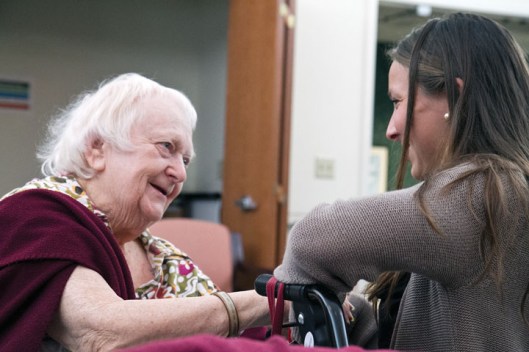
Photo for Blog

I’ve been thinking about the idea of awkwardness lately. “Awkward” is common in the lexicon of my daughters’ generation, and not necessarily seen as a negative.  “It was so awkward,” my older daughter once said with delight after finding herself on a dorm floor full of college boys as she and her friend looked for her friend’s older brother. Some of our best stories come from initially awkward encounters.  I wonder if what makes the outcome of these stories ultimately positive is that we were able to push through the awkwardness to something better on the other side.

A memory from over a year ago, captured in the photo above, points to this – with a college class in September 2013 I found myself spending the day volunteering at the nursing care facility at our local retirement center.  Our tasks were simple – to sing songs, play games, take walks, and generally interact with the residents – but felt anything but simple as the 20 of us stood in that initially awkward space. As a collective shyness permeated the room, one young woman moved towards an old woman, grasped her hands, and began a conversation. Claire’s model empowered the rest of us to spring into action.  There was more awkwardness throughout the day, to be sure, but we now had more trust in ourselves to push through it.

This memory helps me identify two ways of thinking about awkwardness.  First, we can embrace rather than avoid awkwardness, whether the awkward moment is humorous or just difficult on the way to something better. Second, we can be confident in our ability to make the awkward not awkward. In my piano practice and teaching I think about this when there is a technical quandary – a part under the fingers that doesn’t feel, look or sound right (or usually all three at the same time).  In my own playing my first tendency is to deny or avoid this awkwardness and keep playing without addressing the issue, with a foolish hope that it will eventually take care of itself.  My teaching requires me to be more mature, which in turn strengthens my practice.  Identifying the awkward and exploring how to ease it leads to a time of experimentation at the keyboard – with hand placement and fingering, with gesture, with phrasing, with repetition and drill – until that beautiful moment when the awkward no longer feels awkward and has emerged into something smooth and authentic.

“Find what you love and let it kill you”

01 Wednesday May 2013

Posted by beverlykl in Motivation, Performing, Practicing

≈ Leave a comment

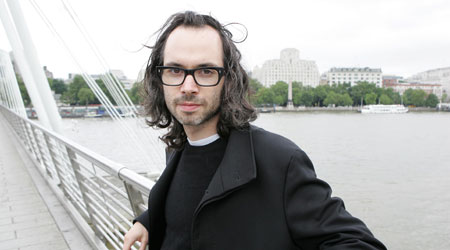
L_JamesRhodes_PianoMan_ep2I am not managing to write these days, but here is an interesting piece by the pianist James Rhodes:

Image

Paradoxes

05 Wednesday Dec 2012

Paradoxes

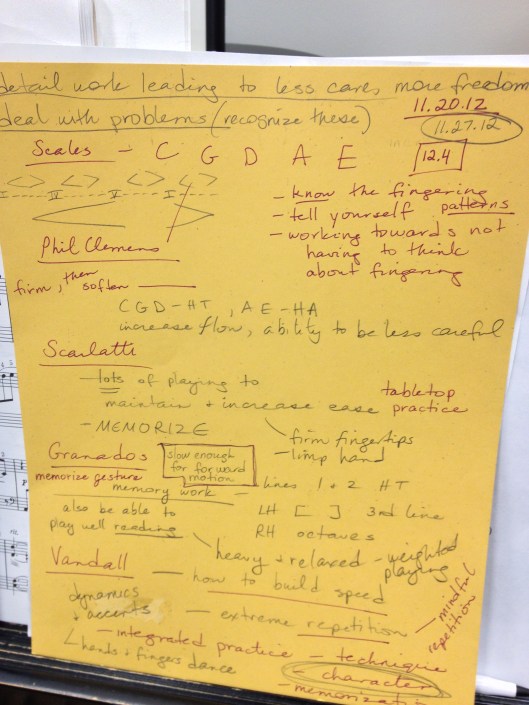
For a while I’ve been fascinated by the written assignments piano teachers give their students. Whether or not these are closely looked at, they are valuable artifacts of the term of study. Here is one for a chemistry major taking his second semester of lessons with me. I enjoy thinking about some of the paradoxes I find on this piece of paper — ideas that I hope to remember in my own practice and life:

• Detail work leading to more freedom, less care
• Slow enough for forward motion
• Heavy and relaxed
• Mindful repetition


Posted by beverlykl | Filed under Learning, Practicing, Teaching

≈ Leave a comment

Ways of Knowing

23 Tuesday Oct 2012

Posted by beverlykl in Knowing, Learning, Music Theory, Practicing, Teaching

≈ Leave a comment

The older I get, the more I know what I don’t know.  In high school and college I played piano with a clueless bravado that allowed my fingers to fly confidently over notes my brain did not fully understand.  Somewhere along the way I became a good sight reader. Was it those adolescent years in Kingston, Jamaica where I had more free time to practice?  Was it the high school choir accompanying I eagerly did?  My piano teacher in high school required regular playing from the hymnal — did this make me a good sight reader? Did it have anything to do with my constant intake of the written word?  The mysteries of why some pianists become good sight readers of Western notation and why others (often some of the best musicians) need more time to absorb the page in front of them are an ongoing hot topic in music pedagogy circles.  Good research is pointing the way to a combination of experiences and strategies.

However the mysteries are solved or remain, I better understand the downfalls of my sight reading abilities and sometimes wish I read less well. In college I was greatly challenged and wonderfully taught, and I played a lot.  But, perhaps in part because there was not enough struggle to read those notes, my knowledge became technical fairly quickly and theoretical awareness rarely surfaced in my individual practice.  My moment of truth (I think each musician has one) occurred in the spring semester of my junior year when I crashed and burned in a public performance of a Beethoven Sonata movement (it was Op. 10 No. 3, movement one, if you must know).  I had played it through from memory many times on my own and in front of my teacher, but I didn’t really know those notes on an cognitive level. I went into the high-stakes environment with an unfamiliar feeling of unease, perhaps finally mature enough to be subconsciously aware that other ways of knowing weren’t there to reinforce the motor-muscle memory in the fingers. The disaster and ensuing tears of mortification led to some of the most important conversations I had with my professors and began a turning point in how I practiced.  The innocence of clueless bravado lost, a new path was needed.

And yet, this turning point seems to be one of the longest curves of my life.  Now more than twenty years later, I still struggle to really know.  Today while practicing Bach’s delightful fugue in A major from WTC book one I felt that familiar learning-too-quickly habit take hold, the notes coming easily and my fingers and ears giddy with what they were doing and hearing — too much intake, too fast, without enough struggle to understand.  Of course the brain can’t be truly bypassed in this situation, and enough repetitions will eventually result in some actual knowing.  But, if I bypass the knowing struggle as my fingers weave their way through the material, I’m only inviting future trouble. So, I keep working at deepening the ways in which I know the music, in essence making sure the struggle is early in the process rather than late.

Here are the ways of knowing I now try to activate.  (These ideas are gathered from my teachers, my students, and various readings, but were particularly solidified when I read Geoffrey Haydon’s chapter “Memorization via Internalization for the Intermediate Student” in Creative Piano Teaching by Lyke, Haydon, and Rollin, 2011.)

1. There is the technical knowing, which I value more and more for its importance as I get older, even as I recognize it was too often my only route of knowing back then.  My fingers need more accurate repetitions than ever, to really have it.  I’m better at recognizing where they are close to faltering even if I can get through that moment, because under just a little bit of pressure, stumbles will happen in those places. There is no room for doubt in my fingers.

2. There is the theoretical knowing, which can seem overwhelming (so many notes!) until I remember that theory is any way of naming what I am doing.  I need ways of talking about musical passages, of identifying beginnings, middles, and endings.  Western music theory is my best path for this, even if I name a passage as simply as, “The place where the hand does the back-and-forth thingy with the E major triad.”  I have to be able to talk my way through an entire piece in one way or another.

3. There is the visual knowing, which has two parts.  First, I am increasingly aware of the photographic memory that develops when I’ve read a page of notation so many times.  (This is a useful way for me to review my knowledge, though not what I want to focus on in a memorized performance).  The other visual is recognizing and knowing the way my hands look on the keyboard when playing a given passage — the amazingly diverse topography found within those black key groups surrounded by just seven white keys.  Away from the piano, I find time to picture myself playing the piece; where I lose the view are places I need to better reinforce in my practice.

4. There is the aural, the knowing of the ears.  I’m learning to sing various melodic lines and practice improvisation on the patterns and harmonies from the music I’m learning.  Being able to trust my ears and improvise my way out of a trouble spot helps me integrate what is written. In the same way I envision myself playing the keys, I close my eyes away from the piano and hear my way through a whole piece to check my aural knowing.

And, finally:

5.  There is the body’s way of knowing.  Awareness of the physical gestures in use is an important part of this.  I am trying to pay attention to how different mechanisms are at work as the body plays various passages, from the feet to the sitz bones to the shoulders, head, face, arms, and fingertips.  Exploring and refining what feels best as the body experiences the music helps helps me recognize and trust the body’s knowledge of the musical experience.

Two final connections.

Until the most recent general education revision, the liberal arts curriculum at my college required each student to take one of two Bible courses  — either Reading the Bible or Knowing the Bible. In my advising sessions I often needed to remind myself that Reading the Bible was for students with previous biblical study background; it seemed to me that the other way around made more sense — that the more advanced course would be Knowing the Bible.  Our Bible/Religion department’s rationale was that you cannot read the Bible until you know how this canon was formed and organized.  Reading the Bible went much deeper into content and interpretation, and was for students who already understood the structure of the volume of books and how to approach a reading encounter with it.  This paradigm reminds me that much knowing goes into reading.  I know a lot already to be able to sight read music well, and it is a vital skill in my line of work. Knowledge makes reading possible. Repeated and mindful reading of any text leads to greater insight and satisfaction.

Recently I’ve noticed a change in how I respond to a familiar comment from students in their lessons. “But I know this.  I don’t understand why I’m not playing it better here.”  In the past I used this as an opportunity to explore nervousness and how to play through it.  Now, recognizing that insecurity about knowing (knowing what you don’t know) is often the main source of anxiety in performance, I respond, “You must not know it as well as you thought.  Let’s look at how you can practice so you know it exceedingly well, in a lot of different ways, and we’ll see if that makes a difference.”

I am still one who needs this lesson the most.

The best performance

29 Saturday Sep 2012

Posted by beverlykl in Learning, Performing, Practicing

≈ 5 Comments

Last night we had a music faculty recital with eight different performers to kick off our recital series for the school year.  The turn out was great and the reception afterwards was a fun gathering of college students, community folks, and children and their families who take lessons in the Community School of the Arts.

I played some Bach, of course — the two preludes and fugues I learned first for this project during the month of August. I described No. 13 in F-sharp major to the listeners as amiable and lyrical and No. 15 in G major as perpetually-moving and energetic. I also told the audience that I am taking on this project because I feel certain these preludes and fugues have much to teach me both technically and musically.  And while I didn’t say it last night, I’m convinced that attempting to learn the entire volume has a number of other life lessons to teach me as well.  Naming the idea of the music being my teacher somehow takes a little pressure off the live performance paradigm, this strange scenario with its deeply-set conventions and expectations.  I’m learning this music to learn, and performances in any setting are opportunities to share what I’ve been taught by the music, rather than to show what I can do.

Sharing what I learned went ok last night.  I felt the stress of balancing teaching, administrative and practice demands this past week, and became aware by Thursday evening that I was practicing with too much urgency and tension.  By Friday afternoon my left arm did not feel good, and I was struggling with some runs in the G major fugue. The opening pair in F-sharp major felt healing to me as an opener, and I tried to communicate the pure joy I feel when playing the G major prelude.  I took the G major fugue a little slower than usual and while it wasn’t the best performance I could give, I felt reasonably in control of its myriad themes and episodes.

This idea of best performance was one of the places my mind went after leaving the stage.  Relief merged with an all-too-familiar and so-often-echoed twinge of regret for musicians — it went better on my own!  I’m accepting it may always be so.  The best performances are often those when my family is asleep upstairs and I’m alone and done with my day, lost in the music at my Yamaha U1.  It’s nearly midnight, and I play masterfully.  No one else, except my cat Archie, hears this best performance. There is something a little bit sad, but also a little bit wonderful, about this.

I am…

18 Tuesday Sep 2012

Posted by beverlykl in Practicing

≈ Leave a comment

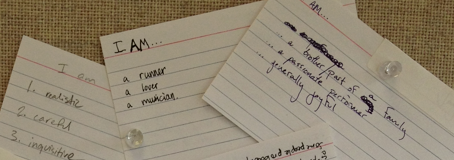
A few years ago in one of my doctoral program classes the professor asked us to write three I am statements that were positive descriptors or identifiers.  We went around three times, saying “I am _____________” on each cycle. I’ve long forgotten what my I am statements were then, but I now repeat the exercise with the first meeting of the Senior Seminar class, a group of music majors in their final year of college.  The ritual runs the risk of awkwardness but the students never fail to make the room resonate with honesty and wisdom.

While the I am exercise can help nurture community in a classroom,  I’m also intrigued by the individual act of embracing the I am as preparation for practice. When we practice whatever it is we practice, whether a musical art or another art such as the auto restoration my spouse loses himself in, we bring everything we are. Naming the I am may mean it lingers through the practice, allowing the mind to mull over all matter of things while at work.  Sometimes, naming the I am helps us set what and who we are aside so we can proceed with the task at hand with a clear mind.  Both — the mulling over and the setting aside — seem to be important parts of my practice.

An I am collage from my students follows.  I love finding out who they are as I keep finding out who I am.

I am…

creative, realistic, a brother/part of a family, silly and therefore good at making people laugh, a creator of art in many forms, an extreme Googler, a Christ-follower, excited about understanding ideas, a small-town guy, a person who finds deep meaning in artistic expressions of the human experience, a runner, happy when working hard on something I am really passionate about, intuitive, chill, careful, a passionate performer, just the right size to be myself, a fairly stereotypical middle child, philosophical, joyful, able to do a single task for extended periods, energized by interactions with others, my body — I trust and care for my body, enthusiastic about my relationships with people, a singer, careful, a fighter, less introverted than I used to be, invested in peacemaking, caffeinated, an adventurer, inquisitive, a musician, generally joyful, a very hard and very conscientious worker, passionate about bringing potential out of others, a lover, wonderfully scatter-brained, an athlete, laid-back, interested in self-reflection, excited for the unknowns of my future, a hard worker, a lover of laughter, a child of God.

Ups and Downs

13 Monday Aug 2012

Posted by beverlykl in Music Theory, Practicing

≈ Leave a comment

One of my favorite ways to make sense of music is as simple as simple can be — to follow the up and down movement of the parts.  Bach’s Prelude No. 13 in F# Major from WTC Book One is a fun one for this.  The opening motive is a broken chord that goes up, then down, then skips to the top of the triad into a trill.  The hands then gently follow each other — the left hand steps down or up while the right hand finishes the triplet by outlining the chord of the moment in that same direction.  Quite often there is clear overall movement either up or down but other times the hands settle briefly into opposite (contrary) motion, with the left hand gradually shifting down while the right hand goes up.

As I play this prelude I enjoy rocking my hand in the direction of these melodies.  When they move in parallel motion this means a slight rocking motion upwards or downwards for both.  I especially love the swinging feeling enabled in the fleeting contrary motion moments — you might see this at the end of the video.

I forgot to rotate this video before uploading and although I eventually figured out how to do some editing in YouTube, I became intrigued by its original positioning.  Learning to play the piano and how to read music is often mystifying until the inconsistencies get sorted out. The notated music moves left to right on the page while the note heads move up and down.  But the keys are level, moving right for up and left for down.  As the notes on the page move down both vertically and to the right, the eyes follow to the right while the hand moves down horizontally and to the left.  And then there are those opposable thumbs, wonderful for enabling the contrary swinging feeling mentioned above, but also maddening at times: the left hand thumb is at the “up” end of the hand while the right hand thumb leads the way down.

Now that I’ve highlighted all the up and down confusions in a possibly confusing way, here is the good news: With the sideways viewpoint of this video there is a vertical visual of the ups and downs. As simple as simple can be, but even more so.

Enough with the words!  Enjoy!  It’s Bach.  It’s beautiful. It moves up and down.

Never ever do this again

11 Saturday Aug 2012

Posted by beverlykl in Practicing, Teaching, Time

≈ 1 Comment

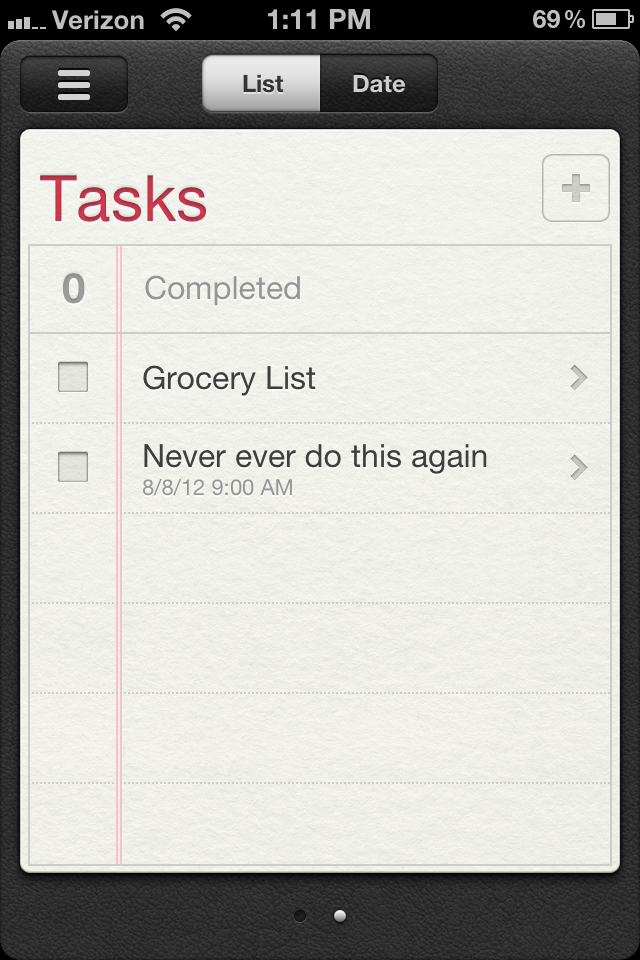
The other day I was driving home from errands with the girls and I turned down a city street I usually avoid.  As I should have remembered would happen, we found ourselves in a long line of traffic at a stubborn red light.  I said to Greta, “Remind me to never ever do this again.”  She decided to tell Siri to send me a note and so the next day at 9 a.m. I saw this on my phone.

Image

As I enter the land of more intentional practice my bad habits are on display, habits I wish I would never ever do again:

1. Read music without thinking about what I’m playing, without listening carefully to my sound, or without observing what is happening technically

2. Play the same passage with the same bad fingering, or a different fingering each time

3. Forget to mark the score when I make a reading mistake more than once (“B#, dummy!”)

4. Whirl through a piece without addressing the problem spots, as if they will magically take care of themselves some day

5. Start faster than I can handle throughout the whole piece, resulting in a messy mix of speeds

6. Fill up my practice time with simply “playing” rather than “working” — forgetting to set one goal at a time and work towards an assessable outcome

These habits are human, so human that of course to expect to never ever do again is a set up for failure. Sometimes I need to play rather than work and some mistakes need to be made a few times before I am convinced there is a better way.  But I know my foibles and how much time they can waste.  I also know what I try to teach.  This new project is a good exercise in aligning intention with action and in matching my advice with my own reality, with plenty of grace to balance the “never ever” hyperbole.

The WTC and Me. And Amy Grant.

06 Monday Aug 2012

Posted by beverlykl in Learning, Motivation, Practicing

≈ 1 Comment

My background with the Well-Tempered Clavier Book One is somewhat scattered, as is my whole piano past.   Were it not for a childhood experience in Kingston, Jamaica, I would likely not be playing piano today.  When I was nine years old my family moved to Jamaica for my parents to be country representatives with Mennonite Central Committee.  By then I had completed two years of mediocre piano study (on my part), but my parents had the sense to find me an excellent teacher in Kingston.  Mrs. Foster-Davis had huge and scary guard dogs outside her estate, an impressive studio with two grand pianos, and a commitment to the Royal Conservatory of Music piano materials and examination sequence.  Although she was nearly blind, she used a magnifying glass effectively to check my hand shape and fingerings.  She assigned music that was too difficult for my limited reading skills, but with a slower pace of life allowing lots of time to play piano I gradually rose to the challenge. I left Jamaica a couple years later having completed the R.C.M. Grade Four adjudications and returned to southeastern PA with the awareness that playing the piano was one of my best gifts.

Back home and working with another fine teacher, I learned some of Bach’s two-part inventions and enjoyed them as much as anything that allowed the fingers to fly around quickly.  I learned only one piece from the WTC book one in high school, a pair often assigned as one of the easiest, the Prelude and Fugue No. 2 in C minor.  The prelude is a classic pattern piece, an excellent rotation study for the fingers building to some fun tempo changes and improvisatory moments that nicely set up the fugue to follow.

I found special motivation for the fugue from the 80’s Christian contemporary song “Sing Your Praise to the Lord” made popular by Amy Grant. Composed by Rich Mullins, the song opens with six measures of the fugue and continues with some fragments as the song unfolds.  I am not much of a music snob (I went to a Merle Haggard concert last night, for goodness sake) and I loved this fusion of classical and Christian pop.  True, I loved it more in 1985 but I still kind of love it.


I found the sheet music and learned my first Bach fugue, or at least part of one, in this format.  I sang the song, pretending I had the ascending backup instrumentals supporting me at the piano, and dreamed of being Amy Grant but only better because I could also play the fugue part.

In a future post I will write more about my past experiences with the Well-Tempered Clavier.  Now I need to go practice, motivated by something other than wanting to be Amy Grant.

← Older posts

Recent Posts

  • You can get there from here
  • Some Sabbatical Reflections
  • Singing for Ceasefire
  • You all know this precocious little boy
  • Helen Longenecker’s Dilemma

Archives

  • December 2024
  • April 2024
  • January 2024
  • November 2023
  • May 2023
  • November 2022
  • March 2022
  • August 2018
  • November 2015
  • August 2015
  • January 2015
  • August 2014
  • May 2014
  • January 2014
  • December 2013
  • November 2013
  • August 2013
  • July 2013
  • May 2013
  • April 2013
  • March 2013
  • December 2012
  • October 2012
  • September 2012
  • August 2012
  • July 2012

Categories

  • Family
  • Higher Education
  • Knowing
  • Learning
  • Motivation
  • Music Theory
  • Peace
  • Performing
  • Practicing
  • Protest
  • Teaching
  • Time
  • Uncategorized
  • Writing

Meta

  • Create account
  • Log in
  • Entries feed
  • Comments feed
  • WordPress.com

Blog at WordPress.com.

  • Subscribe Subscribed
    • Some Well-Tempered Years
    • Already have a WordPress.com account? Log in now.
    • Some Well-Tempered Years
    • Subscribe Subscribed
    • Sign up
    • Log in
    • Report this content
    • View site in Reader
    • Manage subscriptions
    • Collapse this bar
 

Loading Comments...