
• About Me

Some Well-Tempered Years

~ And Other Adventures

Some Well-Tempered Years

Category Archives: Time

Some Sabbatical Reflections

01 Monday Apr 2024

Posted by beverlykl in Time

≈ Leave a comment

Tags

rest, sabbath, sabbatical

These words are adapted from a chapel reflection I gave at AMBS in February.

In 1951, Rabbi Abraham Joshua Heschel published a slim volume on the observance of the Sabbath. Heschel was a prominent rabbi and Jewish public intellectual, and was deeply involved in the civil rights movement, including participating in the march from Selma to Montgomery. His book on the Jewish Sabbath talks about sabbath as the gift of time. As Fannie Bialek reflects in the essay linked below, to Heschel sabbath is “a realm of time, distinct from the realm of space, where we live the other six days of the week. In the realm of space our aspirations are competitive: You and I can never occupy precisely the same space, so our projects in the realm of space are defined by jostling for possession, security and control. But time can be spent together — we can share time, fully, in a way we can never fully share space. That defines the aspirations of time differently: not to have, but to be; not to own, but to give; not to control, but to share; not to subdue, but to be in accord…” See Bialek’s full piece at https://humanities.wustl.edu/features/fannie-bialek-politics-time-lessons-sabbath-justice

My primary goals for sabbatical were to receive spiritual direction twice per month, to work on some musical projects, and to spend time sorting, reading and reflecting on a sizable collection of written material by my parents who each passed away in the last two years. I did all these things, and tried to remind myself that none of these projects would or should come to a place of completion. My spiritual director helped by introducing me to Rabbi Heschel’s view of sabbath. She described sabbatical as rooted seed, and that when we allow ourselves to rest, what is rooted in that rest can now flower. This idea of sabbath as the root of something allows us to think about what was started and what will continue rather than what we got done. 

As I pursued my three primary projects, I noticed three stages that I was moving through in both linear and circular ways: Emptying, Inviting, and Creating. 

About Emptying

I was quite tired as sabbatical began. It was a good tired, the kind you feel after working hard to make something happen and then getting the opportunity to rest after that something has happened. What I was resting from included a rush of activity as I prepared to be absent from AMBS for three months, which meant lots of meetings and preparation of documents and resources for colleagues who would be responsible for my usual work. 

I was also resting, in a sense, from five fairly intense years at AMBS and the unexpected losses of both of my parents 13 months apart. There were a lot of experiences that I wanted to reflect on. 

I also felt overwhelmed with details. My brain felt too full and cluttered. While I felt I could manage ok without a sabbatical, I also recognized that my brain needed some rest from details. One of the first books I read was Ten % Happier by Dan Harris, a book about meditation and mindfulness written by someone who was very skeptical about meditation. I have only just begun a meditation practice, but one way I’ve learned to think about mindfulness is that it is an emptying, creating space for the Spirit to speak and lead. We can practice this in many ways. We can close our eyes and slow down our breathing…and then focus our minds only on the sounds we hear in a quiet room. As we do this we may notice various thoughts getting in the way…the meeting or class we need to prepare for, a conflict we are worried about, wondering what we will eat for lunch. We do our best to put aside those thoughts and only notice the pace of our breathing and any sounds breaking through the silence of the room. If the thoughts break through again, we try not to judge ourselves. We try to simply notice that it happened and gently put them aside once more. 

One of the most profound mindfulness experiences I had on sabbatical was in mid-November. It took place during a live performance by the Philadelphia Orchestra in center city Philadelphia. Hearing a professional orchestra is a great joy for me, and I was excited about this concert. As I settled in to hear the opening numbers, I was reminded that these players are so good that it’s a real shame to let my mind wander while sitting in their presence. The second half of the program was the epic 1st symphony by Gustov Mahler and as it began I tried to focus only on the musical lines and trajectory, without any other thoughts breaking through. This seems obvious and basic but is incredibly hard for my wandering mind. I had some good stretches of focus, perhaps better than I’ve ever managed. It was so satisfying that I would have loved for the orchestra to announce that they were going to do the whole hour-long work again. 

I cannot fully convey how rewarding it is for me to listen or play music with this level of mindfulness, and how strange it is to realize that with three degrees in music, I’m still a beginner at it.

This type of listening, this type of mindfulness, requires an emptying. I began to listen to more music during the sabbatical, especially instrumental music without words. I pushed myself, reluctantly, to go on walks without a podcast or music to listen to, with the challenge of focusing as much as possible on what I saw or heard during my walk. With the help of a meditation app, I tried moments of centering stillness and breathing. These practices of mindfulness helped me engage in emptying and to get outside of my head.

About Inviting

The second stage I experienced was Inviting. I spent a lot of time reading my parents’ written materials. As I reflected with my spiritual director on what I was finding, it was hard to stop crying. At one point my director gently said, “I think your mother and father may be your guides through this season of your life.” This idea of still being mothered by the singular Helen Longenecker Lapp and fathered by the inimitable Sam Lapp, helped with the gift of boxes and boxes of their writing, was a profoundly comforting invitation. 

When he was 21 years old, my Dad moved to Honduras for two years where he worked as an agricultural and construction volunteer, as an alternative to military service. Dad wrote these words to his parents in January 1960. 

Dear Folks, 

I just moved my chair in from outside. It’s a beautiful evening outside and I simply had to go out to enjoy it. It’s one of those evenings when the people are outside instead of locked in their houses. There are a million stars visible to the eye and the moon is the size of one of the Honduran bananas. I didn’t feel one bit like coming inside cause the scenery and music of the out-of-doors is too wonderful to be missed. God’s creation in Tocoa is perfect like all over. The tall trees in the moonlight, the mountains and their peaks – overshadowed with dark fluffy clouds, and the thatched roof houses and their points jotting up all over is really a sight to see. There are frogs croaking and crickets cricketing and I can even hear the stars twinkling, all of which make up the best orchestry I ever heard. Fifty yards up our street are a couple of men singing to the accompaniment of a guitar…about the sun, moon and stars – that’s about all I can understand. Life is so different here. Really I feel like a million bucks and I like everything here more each day. I learn a little more Spanish each day and that makes it a little easier to learn a little more so that I guess at the end of another six months I’ll be ready to understand and say what I want to. 

My Dad’s words are inviting me to pay attention, and so much more. 

In 1968 my mother wrote a short article for a church magazine. It was called “With Confidence”. Here are a few excerpts. 

A New Year named 1968! A year when election promises will hammer at us from radio and TV. When my country wages war in the name of duty and sells guns to bickering nations. When those with too much will want more gadgets, while millions call for bread. When church  members will go and do with impressive busy-ness, while postponing love and involvement. 

But it will also be a year full of personal, individual dreams and fears. For me it is a year to become a new mother. Although I have observed hundreds of mother-baby combinations, I wonder what it will be like for me. As fascinating questions crowd out my fears, I sense the universality of my new role. 

Later in the article she wrote:

God, I come to You concerning this new year. I do want to be a good mother, but I fear my tendency to concentrate on my own small world. Let me see and know my neighbor this year. 

As I hope to spread Your love, teach me how to humbly admit and share my own needs. Forgive and take away my compulsion to give all the answers. Remind me to pause constantly for a refreshing view of Your love. 

What a gift, to receive wisdom from others, whether from antiquity, from the distant or recent past, or from the people next to us today. 

About Creating

The third theme I experienced and learned more about during sabbatical was Creating. I mostly did this at the piano, and with some writing. But perhaps the most surprising act of Creation was finding myself in a peace school on Martin Luther King Jr. Day in January in Washington DC, and then in the rotunda of the Cannon House Building, singing and leading hymns with 135 other people as an act of civil disobedience to call attention to the devastation happening in Gaza. I was arrested with about 135 other people that day, and the experience was a profound time of learning, trust, and creation.  This event was organized by a new entity called Mennonite Action, which has two primary goals: 1) for an immediate ceasefire and return of all hostages and 2) for a political solution that results in sustained peace for the people of Israel and Palestine. I have written more about this experience in another blog post. 

As sabbatical came to a close, it was important to return to the idea of sabbatical as a time to focus on what will continue rather than dwelling on what was or was not completed. I am eager to continue emptying, inviting, and creating as I return to regular routines, and grateful for the extra practice that times of rest, whether small or substantial, allow.
New Year Agenda Part One

31 Monday Dec 2012

Posted by beverlykl in Time

≈ Leave a comment

On the Saturday before Christmas I felt a little lost.  There were too many random items on the schedule and so many possibilities to fill in the gaps that I operated in a daze most of the time, unsure of where to focus. The next day, however, had just the right amount of structure with church in the morning and open space in the afternoon to deal with the urgency of Christmas Eve approaching.  I made an agenda and lived into it, even though I did not complete it all.  I felt happy and alive that day.

The contrast between the two days helped me remember that I do better with an agenda.  It is sometimes fun to float freely through a non-busy portion of the day, and I need these times now and then.  But too much free floating leads to dissatisfaction and even a sinking into a perplexing sadness, the kind that makes you want to shake yourself — “You are so blessed!  You have so much, and today you even have time.  Why are acting like this?”

This past term was a heavy one in terms of teaching load and adjusting to new administrative responsibilities.  I teach a bit less next term, with an intense May term course to follow.  There will be plenty to do, but with a less harried daily schedule I know I will need to be very agenda-driven to use my time well.

So as we move into the New Year, I’m making some agenda.  Resolutions are wonderful but often seem to fade into February or March for me.  Agenda, however, has a way of providing a flexible structure. Agenda can be easily unrealistic, but usually there is some built-in grace — if one agenda item is not met, it can likely work just as well the next day or week or month.

Agenda works best for me when I share it with others, whether at the start of a class, lesson, meeting, afternoon with my family, or here. In my next post I’ll share my New Year Agenda.

From Smug to Chastened

02 Sunday Dec 2012

Posted by beverlykl in Learning, Teaching, Time

≈ 1 Comment

Around midterm I was feeling smug about how busy we keep our students in my department.  I was fully aware, but newly reminded, of how much our music students are balancing.  They are working diligently at their full-time course work, have part-time employment, are involved in multiple ensembles, and practice their instrument several hours per day alone or chamber groups.  They say yes to opportunity and rarely complain. I find out from time to time about ways they are involved in non-musical ventures across campus and am further impressed. I am amazed at how well they balance these demands.

I was also feeling smug about my own level of activity and that it is good that I model the juggling of teaching and administrative work, a family life, involvement with a church community, and a commitment to my own writing and musical growth.  Sure, I deal with stress, don’t always get enough sleep, and wish I could give more time to most tasks, but generally it’s good.  Life is good.  I’m blessed to be busy and fulfilled and there is a certain thrill at that manic part of the semester when the pace is fast and ridiculous.  I thrive on it.  At least, I think I do.

There is this nagging worry, though, that maybe we are teaching and practicing the wrong thing. What if this ability to manage so many varied responsibilities, more than are really possible in one day, is not what we should be nurturing?  Too often any real exploration of an idea or in-depth problem-solving doesn’t happen because there simply isn’t time or space for the immersion that is required.  Too often we are doing too much with not enough sleep, exercise, time, or focused attention.

I know this extreme busyness is part of the semesterly cycle.   Papers, exams, juries, and grades will soon be done, next term a safe distance away, and we will all breathe. We will have, as a friend once described it, a good collapse.  We may even find some time to focus on a task we yearn to explore more fully.

In the meantime, what types of lives are we modeling and promoting?  I told a colleague about my smugness leading to a chastened state and she laughed and said, “Well, smugness is usually a warning.”  College students struggle with anxiety like never before.  I may post articles about the benefits of caffeine on Facebook, but just as much research is out there about the dangers of inadequate sleep.  What if some normally dependable students turn in sub-par work a little too often, have too many weeks of weak practice, or show signs of substance abuse or other harmful ways of handling the stress?  At what point will I demand that there be less on their plate and less on my own so various tasks get the quality time they deserve?

As per usual, I offer no real answers.  And I don’t want a conclusion that says a liberal arts degree scatters our attention too much, nor a finding that we need to lower expectations of our students’ musical growth.  I’m convinced that one can experience meaningful study in one’s primary discipline while being broadly educated and involved. I also recognize that any discussion of scattered attention today is incomplete without addressing technology and constant connectivity. I’m encouraged by ways we do have of capturing immersion and enabling focus in education. Certain projects, like a senior recital or thesis, demand it.  Intensive January or May terms and curricular requirements like a Study-Service-Term in another country are the definition of it.

But during the primary seasons of life we keep asking for more and glorifying the ability to do it all.  Chastened a bit, I will keep thinking about what current and future habits we are shaping with this glorification.

Never ever do this again

11 Saturday Aug 2012

Posted by beverlykl in Practicing, Teaching, Time

≈ 1 Comment

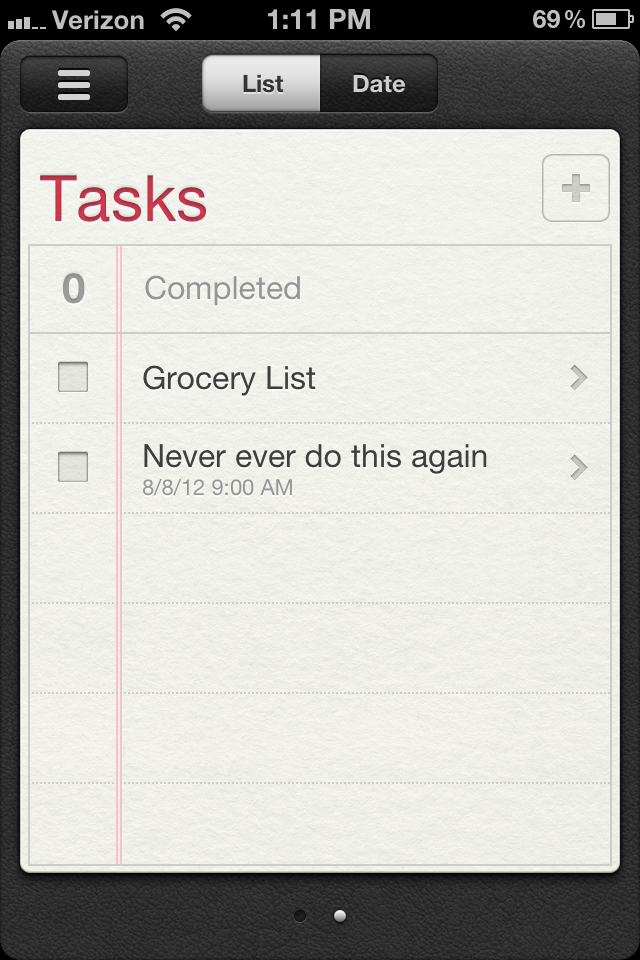
The other day I was driving home from errands with the girls and I turned down a city street I usually avoid.  As I should have remembered would happen, we found ourselves in a long line of traffic at a stubborn red light.  I said to Greta, “Remind me to never ever do this again.”  She decided to tell Siri to send me a note and so the next day at 9 a.m. I saw this on my phone.

Image

As I enter the land of more intentional practice my bad habits are on display, habits I wish I would never ever do again:

1. Read music without thinking about what I’m playing, without listening carefully to my sound, or without observing what is happening technically

2. Play the same passage with the same bad fingering, or a different fingering each time

3. Forget to mark the score when I make a reading mistake more than once (“B#, dummy!”)

4. Whirl through a piece without addressing the problem spots, as if they will magically take care of themselves some day

5. Start faster than I can handle throughout the whole piece, resulting in a messy mix of speeds

6. Fill up my practice time with simply “playing” rather than “working” — forgetting to set one goal at a time and work towards an assessable outcome

These habits are human, so human that of course to expect to never ever do again is a set up for failure. Sometimes I need to play rather than work and some mistakes need to be made a few times before I am convinced there is a better way.  But I know my foibles and how much time they can waste.  I also know what I try to teach.  This new project is a good exercise in aligning intention with action and in matching my advice with my own reality, with plenty of grace to balance the “never ever” hyperbole.

How we spend our time

02 Thursday Aug 2012

Posted by beverlykl in Motivation, Time

≈ 1 Comment

I feel like I should explain my “Dead White Guy?  Really?” title and commentary in the first post.  Attempts to be witty can easily be interpreted as disrespectful, and I meant no disrespect towards J.S. Bach.  I hope he knows that.  Taking on a project like this, however, involves some evaluation of how I spend my time broadly and specifically with music.

A few weeks ago at church we had a guest speaker from Goshen’s Interfaith Hospitality Network (IHN) who shared about the organization’s work with our city’s homeless population.  It was a moving and sobering reminder of the significant needs right here in our community.  As I listened I found my mind wandering to my exciting new project —  “I’m going to learn WTC Book One! I can’t believe it!”  Then the speaker’s voice cut through my delight and I snapped back to the stories of families struggling to break out of poverty and those dedicating their time to help them. My new project seemed slightly more ridiculous — perhaps my first post should have been titled, “Hours of your life learning solo keyboard music when there are so many needs in the world?  Really?”

The usual responses to this forever question are comfortably lodged in my consciousness — a hurting world needs art and beauty, etc.  But the next layer of guilt soon arrives, reminding me of today’s creators and composers who represent so much of the world’s diversity, work hard on their craft and are in need of exposure.  Why not focus my time sharing the art and beauty of this breathing music rather than on a volume that is so deeply entrenched in the Western classical musical canon?

Last night I watched a Jon Stewart clip about the Chick-fil-a mess and a solution for these life conundrums was revealed — like carbon offsets, let’s offset our money and time choices. For every Chick-fil-a sandwich we feel guilty about (if we do), a Ben and Jerry’s pint.  For every prelude, I could volunteer a couple hours at or donate to IHN.  For every fugue, I could do something tangible to promote music by a living composer.  (Start at 2:15 to see the relevant part of this clip):


Will I do these things?  I don’t know yet. To be honest, my encounters with poverty and my concerns about ethics don’t result in as much concrete action as they should. At a core level, in fact, I feel fine about hours spent practicing Bach and don’t know that they need to be routinely offset with anything. However, consistent practices to live out my concerns, even if motivated by guilt, keep me grounded, aware, and honest. And may even do some good.

Recent Posts

  • You can get there from here
  • Some Sabbatical Reflections
  • Singing for Ceasefire
  • You all know this precocious little boy
  • Helen Longenecker’s Dilemma

Archives

  • December 2024
  • April 2024
  • January 2024
  • November 2023
  • May 2023
  • November 2022
  • March 2022
  • August 2018
  • November 2015
  • August 2015
  • January 2015
  • August 2014
  • May 2014
  • January 2014
  • December 2013
  • November 2013
  • August 2013
  • July 2013
  • May 2013
  • April 2013
  • March 2013
  • December 2012
  • October 2012
  • September 2012
  • August 2012
  • July 2012

Categories

  • Family
  • Higher Education
  • Knowing
  • Learning
  • Motivation
  • Music Theory
  • Peace
  • Performing
  • Practicing
  • Protest
  • Teaching
  • Time
  • Uncategorized
  • Writing

Meta

  • Create account
  • Log in
  • Entries feed
  • Comments feed
  • WordPress.com

Blog at WordPress.com.

  • Subscribe Subscribed
    • Some Well-Tempered Years
    • Already have a WordPress.com account? Log in now.
    • Some Well-Tempered Years
    • Subscribe Subscribed
    • Sign up
    • Log in
    • Report this content
    • View site in Reader
    • Manage subscriptions
    • Collapse this bar